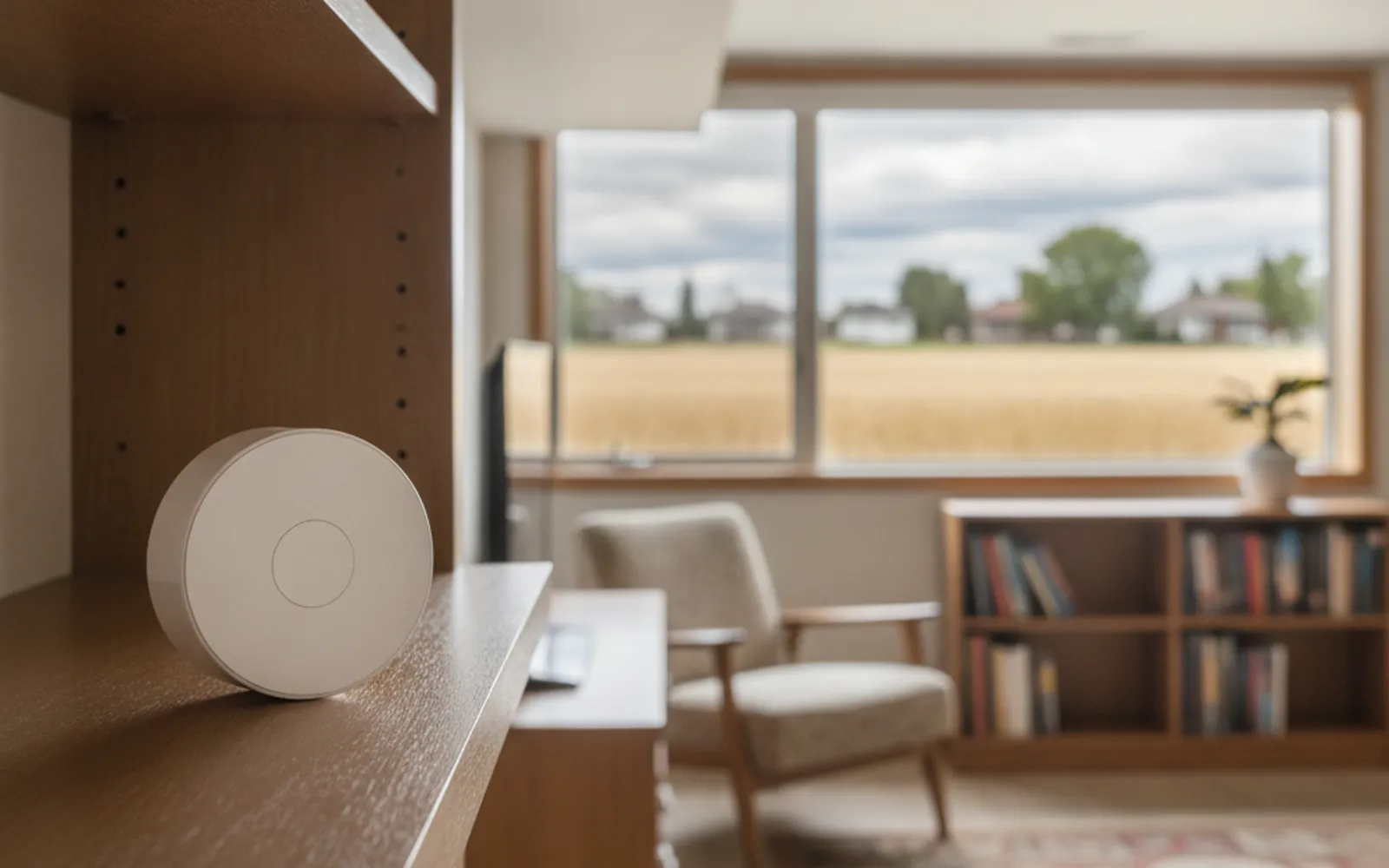
Health Canada's method is a test of at least 91 days in the heating season, in the lowest room you actually live in. It's cheap, it's slow, and it's the only number worth making a decision on.
Radon testing in Winnipeg is mostly a waiting game. You put a detector in the lowest lived-in level of the house, leave it through at least 91 days of the heating season, then send it off or read it. Health Canada says 3 to 12 months gives the truest picture of your average annual level, and that average is what the 200 Bq/m3 guideline is measured against.
It's worth the wait here. Of the Winnipeg homes tested in the 2024 Cross-Canada Survey, 37.4% came in at or above 200 Bq/m3, and Health Canada is clear there are no radon-free areas of Canada. Your neighbour's result doesn't tell you yours, so the honest advice is to test first and talk about mitigation only if the number calls for it.
At least 91 days of the test fall in the heating season, and 3 to 12 months is better. Anything shorter is a screening, and Health Canada recommends repeating it.
The detector goes in the lowest lived-in level, in a room someone uses more than 4 hours a day, at least 30 cm above the floor and 30 cm from walls. Not the furnace room, and not beside the sump.
Passive long-term detectors, such as alpha-track kits, sit untouched for months and then go to a lab. The lung associations' kit from HomeRadonTest.ca is $70.00 before tax, with shipping both ways and the analysis included.
Electronic monitors show a running number, which is handy for a first look. For a long-term result, Health Canada says use one that passed C-NRPP performance testing.
We'll go through what your number means against Health Canada's 200 Bq/m3 guideline, and what it doesn't mean. No colour-coded panic charts.
Retest after a mitigation system goes in, after energy retrofits, and when a new floor becomes the lowest lived-in level. Homes with an active system should retest every five years.
The Health Canada method is simple and slow. Test for at least three months, with a minimum of 91 days during the heating season, and ideally for 3 to 12 months. The Manitoba government suggests winter, roughly October to April, when the house is shut tight.
Placement matters more than people expect. Put the detector in a normal occupancy area of the lowest lived-in level: a finished basement, a basement bedroom, a rec room the kids use every evening. Keep it in the breathing zone, at least 30 cm above the floor and 30 cm from walls or ceilings, and away from:
The usual failures are dull ones. A kit left in the laundry room or an unfinished basement measures a space nobody lives in, and a test pulled before 91 days doesn't answer the annual-average question. Health Canada's advice for a short test is simply to do it again.
You'll run into two classes of equipment. Passive long-term detectors, such as alpha-track kits, stay put for the whole test and then go to a lab; the kits sold through the provincial lung associations are analysed by the Saskatchewan Research Council. HomeRadonTest.ca charges $70.00 per kit before tax, and the Manitoba government puts retail kits at between $50 and $100.
Digital monitors give a live reading and work well for screening. The Winnipeg Public Library lends them free from all 20 branches between 1 November and 30 April, on a three-week loan with no renewals and a library card in good standing. If you want a monitor for a long-term test, Health Canada says choose one that passed C-NRPP performance testing.
One practical catch: the Lungs Matter grant needs a long-term 90-day test from a C-NRPP approved kit, and homeowner-level digital monitors don't qualify. If there's any chance you'll apply for help with a fix, use a lab kit for the test that counts.
Radon is measured in becquerels per cubic metre, written Bq/m3. US kits and apps may show pCi/L instead: 37 Bq/m3 is 1 pCi/L, so Canada's 200 is about 5.4 pCi/L. The 200 figure is Health Canada's guideline for the average annual level in the lived-in area. It isn't a legal limit, and no Manitoba or Saskatchewan law requires a homeowner to test or fix.
Above 200, Health Canada recommends corrective action within 1 year. Below 200, it also says there is no level considered risk free, so a result just under the line is a lower number, not a clean bill of health.
Why anyone bothers: Health Canada calls radon the number one cause of lung cancer in non-smokers and estimates it's behind more than 3,000 lung cancer deaths in Canada each year. That's the one grim sentence on this page. The rest is logistics.
Health Canada is blunt about this. Short-term measurements "are not appropriate for informing mitigation decisions", because the 200 Bq/m3 guideline applies to your average annual level, not to a few days of readings.
The money is real. Winnipeg installers advertise systems from about $1,500 to $3,000; a Regina installer quotes $2,500 to $3,500. A free 15-minute screening, which one Winnipeg firm offers, or a week on a library monitor is a good reason to start a long-term test. It isn't a reason to sign a contract.
If your long-term number comes back over 200, read what mitigation costs and how sub-slab depressurization works. Buying or selling on a deadline? The home sale testing page covers what a short screening can and can't tell you. Or call now on (204) 555-0173 and we'll talk it through.
At least 3 months, with a minimum of 91 days during the heating season. Health Canada says 3 to 12 months gives the most accurate annual average. A test shorter than 91 days should be repeated before you decide anything on it.
A long-term kit from HomeRadonTest.ca, the ordering site the provincial lung associations use, is $70.00 before tax, including shipping to and from the lab and the analysis. The Manitoba government says retail kits generally cost between $50 and $100. We found no published Prairie price for a professionally placed long-term test, so a radon measurement professional will quote that.
Yes. Every Winnipeg Public Library branch lends a digital screening monitor free from 1 November to 30 April, for three weeks with no renewals. CBC reported the monitor should sit at the lowest level of the home for at least seven days. It's a screening tool, so follow a worrying reading with a 91-day test.
Health Canada recommends corrective action within 1 year, by a C-NRPP certified mitigation professional you can check in C-NRPP's online directory. In Manitoba, Lungs Matter offers up to $1,500 to low- or moderate-income households with a qualifying test and quote, though funding is limited and it doesn't cover work already done. Manitoba Hydro's Home Energy Efficiency Loan covers radon mitigation up to $5,000 over 5 years at 6.2% (O.A.C.).
We found no Manitoba or Saskatchewan rule requiring radon testing or disclosure at sale. C-NRPP says a short-term screening could give some insight during a sale, followed by a long-term test of at least 91 days after you move in. Conditions, holdbacks and disclosure are questions for your realtor or lawyer.
No-obligation quotes from independent certified radon professionals.